

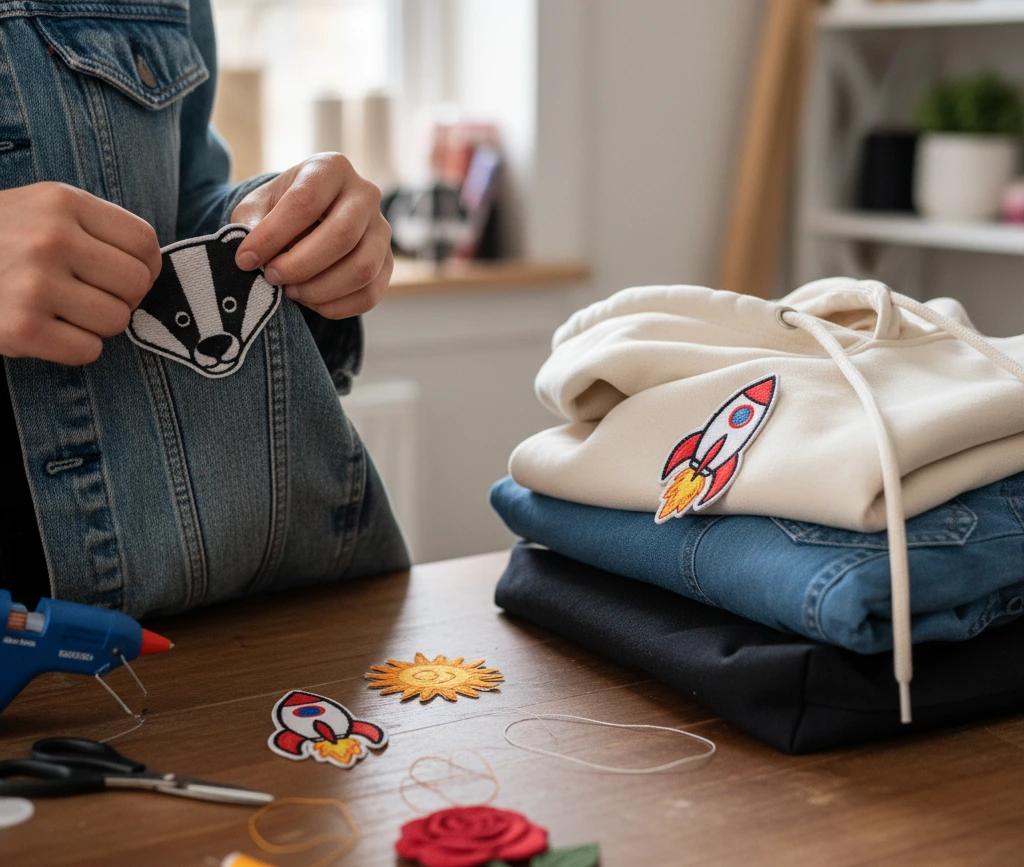
In the realm of individualized style and sustainable design, the challenge is not only how to apply a patch but also how to maintain it. Patches are frequently more resilient than the clothing they are affixed to, whether they are a custom-designed work of art, a vintage treasure, or a premium tactical symbol.
You’ll be happy to learn that you can definitely reuse patches on new clothes if you have a favorite jacket that has seen better days but contains a patch you’re not ready to part with. Nevertheless, the original attachment technique and patch material are the only factors that affect the transfer’s success.
We will go over how to remove, prepare, and reapply patches in this thorough guide so you can maintain your own look across several generations of clothes.
Why Use Patches Again?
Before delving into the “how,” let’s examine the “why.” In the Canadian DIY fashion movement, reusing patches is becoming more popular for several reasons:
- Sustainability: Replacing an old garment with a new one prolongs the life of your accessories and cuts down on textile waste.
- Sentimental Value: A lot of patches stand for significant occasions that are difficult to duplicate, including vacations, club memberships, or special occasions.
- Cost-effectiveness: Premium bespoke PVC or embroidered patches are long-lasting. The expense of purchasing new ones is avoided by reusing them.
- Vintage Aesthetic: On a new denim vest, a worn-out, “broken-in” patch frequently looks better than a stiff, new one.
Evaluating the Attachment Approach
Finding the original method of attachment is the first step in reusing a patch. This establishes the equipment you’ll require and the probability of a clean removal.
Sewn-on patches, the ultimate in reusability
Reusing sewn-on patches is the simplest. The removal procedure rarely causes damage to the patch or the new garment because they are secured in place by thread rather than chemical adhesives.
Iron-On Patches (The Difficult Rerun)
Heat-activated glue is used as the backing for iron-on patches. They can be removed, but the old adhesive must be liquefied using heat. Making sure the leftover adhesive doesn’t ruin the new cloth is the difficult part of this situation.
Hook-and-loop Velcro Patches
Velcro patches are widely used in Canadian military and tactical equipment because they are simple to replace. To make room for the patch’s “hook” backing, all you have to do is sew a “loop” (soft) panel onto the new item.
Stick-on or Adhesive Patches
Usually, these are meant to be used temporarily. Although they can be moved once or twice, the adhesive gradually loses its “tack” and will eventually need to be sewn or fixed with fabric glue.
How to Remove Patches from Old Clothes Safely
Taking Off Sewn-On Patches
Small embroidery scissors or a seam ripper are required tools.
- To clearly see the stitching, turn the clothing inside out.
- Cut every few stitches as you carefully run the seam ripper under the threads.
- Pull the patch away from the front slowly.
- Using tweezers, remove the loose thread fragments from the patch’s back.
Tools for Taking Off Iron-On Patches
Tweezers, parchment paper, and an iron are required.
- Cover the patch with a piece of parchment paper.
- To soften the adhesive, use a hot iron (without steam) for 15 to 20 seconds.
- After the adhesive has warmed up, carefully peel the edges with tweezers. The glue will be very hot, so never pull with your fingers.
- Reapply heat if the patch is resistant. Avoid pushing it since you could rip the embroidery.
Getting the Patch Ready for Its New Home
It requires a “refresh” when the patch is removed from the old clothing to be prepared for its future life.
Clean the Edges: Cut off any frayed edges. Take care not to cut the structural threads if the patch is embroidered and has a marrowed edge.
Remove Old Glue: A thick, crusty layer of old glue may be present on iron-on patches. Reheating it and gently scraping it with a dull knife or using a specialized fabric adhesive remover (try on a tiny area first) are common ways to remove this.
Flattening: To make sure the patch fits flush on the new garment, lay it under a heavy book for a whole day if it curls during removal.
The Best Ways to Reattach Patches
There are three main ways to reattach a patch to a new article of clothing:
The Expert Stitch (Suggested)
We advise sewing the patch onto the new clothing, even if it was previously an iron-on patch. This guarantees that it won’t come off during a wash cycle and makes future removal simpler. Usually, a running stitch around the border or a basic whip stitch will do.
Applying Fabric Adhesive
A high-quality permanent fabric adhesive can be used if you’re not good with a needle and thread. After applying a thin layer to the back of the patch and pressing it firmly onto the new garment, let it cure for 24 to 48 hours.
Using Adhesive Film for Re-Ironing
The majority of Canadian craft stores sell “Heat bond” or comparable iron-on adhesive sheets. Cut a piece into the shape of your patch, iron it onto the old patch’s back, and then iron the entire thing onto your new jacket.
Selecting the Appropriate Material for Your Repurposed Patch
When it comes to hosting a reused patch, not all fabrics are made alike.
- The best hosts are canvas and denim. They take stitching quite well and are strong enough to support the weight of heavy embroidery or PVC patches.
- Leather: Excellent for “biker”-style patches, but keep in mind that each needle hole in leather is irreversible. If you are recycling a patch on a leather jacket, make an effort to utilize the holes that are already there.
- Synthetic/Performance Fabrics: Because polyester and nylon can melt, use caution while applying heat (ironing). Here, sewing is always the safer option.
Keeping Your Story Alive
Your patches are representations of your character and life experiences, not just pieces of cloth and thread. You can keep your own look while transitioning through various phases of life and fashion by knowing how to reuse patches.
Taking the effort to properly remove and reattach your patches guarantees that they will be with you for many years to come, whether you want to improve your favorite denim vest or transfer a memorial patch.
Are you prepared to expand your collection?
Explore premium bespoke options that are made to last, move, and be reused by visiting Custom Patch Makers Canada.