

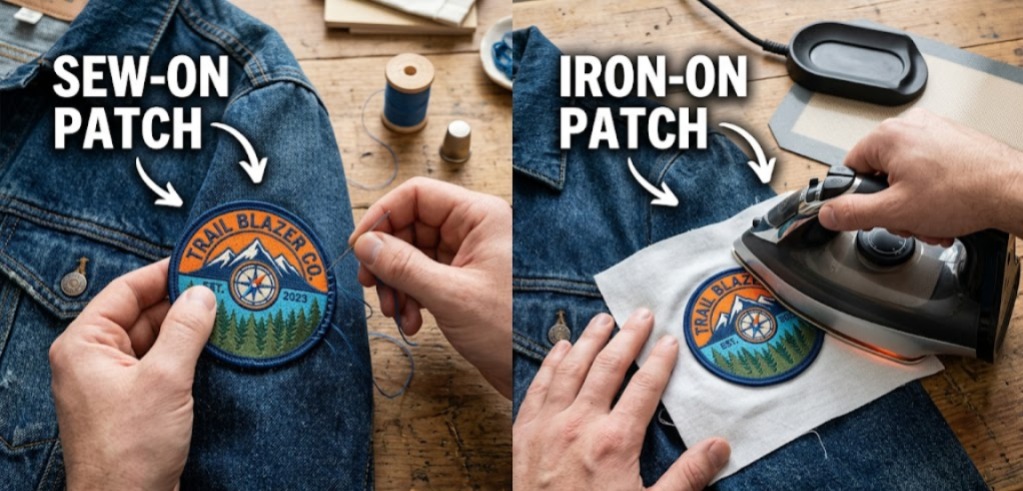
Regardless of whether you are personalizing a piece of tactical gear, a corporate uniform, or a denim jacket, picking the best way to attach a custom design is just as important as the design itself. A question we are asked quite frequently here at Custom Patch Makers is: What is more long-lasting, a sew-on patch or an iron-on patch?
The short answer is that a sew-on patch is more long-lasting, but as you might expect, the best choice really depends on what you are doing and when you are doing it. We’ll take a closer look at the advantages and disadvantages of each in this in-depth analysis.
The Fundamentals: Comprehending the Mechanism
Let’s take a look at how these two types of patches work before we crown one the winner for longevity.
Sew-On Patch: What Is It?
Exactly what it says it is. It is a sew-on patch. It either comes with a thin layer of plastic stabilizer or is plain. It is sewn directly into the fabric using a needle and thread. As such, it is a mechanical attachment.
An Iron-On Patch: What Is It?
The back of the iron-on patch is coated with a layer of dry adhesive, referred to as “Heat Seal.” It melts into the fabric when heat is applied with an iron or iron-on press. It is a chemical bond.
Which Will Last the Longest in a Durability Showdown?
- Resilience and Lifespan
When we discuss “lasting longer,” we mean the number of years (and wash cycles) that the patch can withstand before it begins to flake or fall off. - Sew-On Patches: The best option for permanence is a sew-on patch. They move with the garment since they are sewn directly into the fabric. A well-made patch can endure for ten to twenty years, frequently longer than the garment.
- Iron-On Patches: These have a limited lifespan but are made for convenience. An iron-on patch usually lasts 20 to 30 washes before the edges start to lift, depending on the adhesive grade and application technique.
Sew-On Patches won.
- Heat and cold resistance
The weather in Canada can be harsh. Your patches must withstand the weather, from the sweltering summers in Ontario to the very cold winters in Alberta.
- Iron-On: Occasionally, intense heat might “re-activate” the glue, allowing the patch to move. On the other hand, severe cold can cause some less expensive adhesives to become brittle, which can result in peeling and breaking.
- Sew-On: Temperature changes do not affect the thread. A sewn patch remains in place whether you’re hiking in the Maritimes or skiing in Whistler.
Sew-On Patches won.
Adaptability and Fabric Suitability
One factor of durability sometimes overlooked is “Fabric Stress.”
- The Factor of “Stiffness.”
- Iron-on adhesive covers the back of a patch in a plastic-like material. It makes a patch stiffer. A thin stretchy T-shirt will stretch when you put an iron-on patch on it, but the patch itself will not stretch. This will cause a tear in the material or a failure in the adhesive eventually.
Which Textiles Are Most Effective? Best for Iron-On:
The best fabrics for iron-on are cotton blends, denim, and polyester. Leather, nylon, and waterproof fabrics are not recommended, as the heat required to dissolve the glue will often burn the fabric instead.
Best for Sew-On:
Everything is good to go for sewing on. There is no danger from heat when sewing on leather, tough canvas, silk, or high-tech sports equipment.
When to Use Iron-On Patches (The Convenience Argument)
Iron-on patches dominate Custom Patch Makers’ high-volume orders for a reason, even if sew-on patches are more durable.
- Speed: Sewing is not feasible if you need to brand 500 uniforms by Monday. An iron-on patch can be applied in fifteen seconds using a heat press.
- No Skills Required: Not everyone is patient enough to stitch by hand or knows how to operate a sewing machine. Everyone has access to ironing.
- Temporary Use: An iron-on patch’s 20-wash lifespan is more than adequate if you are marking products for a one-time event, trade exhibition, or seasonal promotion.
Expert Advice: The Hybrid Approach
For the best security, we recommend that you use the “Best of Both Worlds” method. First of all, you should use the “iron-on” method. This will ensure that your patch remains securely attached to your garment. It will not shift. Then, use a simple “running stitch” or “whip stitch” to encircle your patch. This will ensure that your repair remains in place even if your adhesive fails after several years of washing.
Why Your Method Matters
If you are searching for custom patches in Canada, you must consider the “Wear and Tear” factor. Below is a quick summary of the best use cases based on our most popular customer requests:
| Use Case | Recommended Method | Why? |
|---|---|---|
| Biker/Motorcycle Vests | Sew-On | Leather cannot be ironed, and wind resistance at high speeds will peel iron-ons. |
| Corporate Workwear | Iron-On + Stitch | Needs to withstand industrial laundering but requires fast application. |
| Sports Jerseys | Sew-On (Zig-Zag Stitch) | Athletic fabrics stretch; stitching allows for movement. |
| Promotional Giveaways | Iron-On | Low cost and easy for the recipient to apply at home. |
| Military/Tactical Gear | Sew-On or Velcro | Maximum durability is required for rugged environments. |
How to Use Every Type to Get the Most Out of Life
Use these expert recommendations from the Custom Patch Makers lab to extend the life of your patches.
How to Iron Like an Expert:
- Preheat the garment: by ironing the patch’s intended location to eliminate wrinkles and moisture.
- Use a Press Cloth: To avoid burning the embroidery, cover the patch with a thin towel or pillowcase.
- High Heat, No Steam: Adhesive is negatively impacted by steam. Make use of a dry setting.
- Pressure is essential: Lean onto the iron with your body weight for 30 seconds instead of merely letting it sit.
- Flip and Repeat: To make sure the glue melts into the fibers, turn the garment inside out and iron the back of the patch area for an additional 30 seconds.
How to Sew-On for Extended Life:
- Align Your Thread: Use premium polyester thread that complements your patch’s border (merrowed edge).
- Use a thimble: Your fingers will appreciate it if you are sewing through canvas or denim.
- Backstitch: To keep the thread from unraveling, always begin and finish with a backstitch.
The Effect on the Environment
Sustainability is a key factor in the modern world. The more sustainable option for the environment is sew-on patches. This option promotes a “circular economy” because it is easy to unpick the patch from the garment and transfer it to a new garment. You can save your customized patch and transfer it to a new jacket in case your favorite patch wears off. Iron-on patches cannot be recycled or reused because they are permanent and can leave a messy glue stain.
Make The Right Decision While Buying Patches!
Which one is longer-lasting? The undisputed winner in terms of longevity is the Sew-on Patch. It performs well in extreme temperatures, stretch tests, and hundreds of washings. It is the best choice when you are in the business of permanent branding.
But when you are in the business of promotional items, fashion trends, and do-it-yourself projects, then an iron-on patch is a great choice too.
Our Specialties
We at Custom Patch Makers make premium quality patches in any material you require: Hook and Loop (Velcro), Magnetic Backing, Heat Seal (Iron-on), and Plastic (Sew-on).
Ready to Get Started on Your Project? Custom Patch Makers is Canada’s leader in high-quality, long-lasting, and fashionable patches, whether you require ten patches for your neighborhood club or ten thousand patches for a nationwide brand.
Common Questions (FAQ)
Can I sew on an iron-on patch?
Indeed! Actually, we recommend it. You can sew on any iron-on patch. The fact that it won’t slip makes the sticky side of the patch a great stabilizer for sewing on the patch.
Do iron-on patches hold up to washing?
Indeed. Iron-on patches tend to flake off because of the heat from the dryer. If you want your iron-on patch to last longer, wash your clothing in cold water and hang it to dry.
What type of patch is best for “Custom Patches Canada”?
PVC patches for outdoor clothing and sew-on embroidered patches for winter coats are in high demand in the Canadian market. For these types of clothing, sewing on the patches is best for durability.