

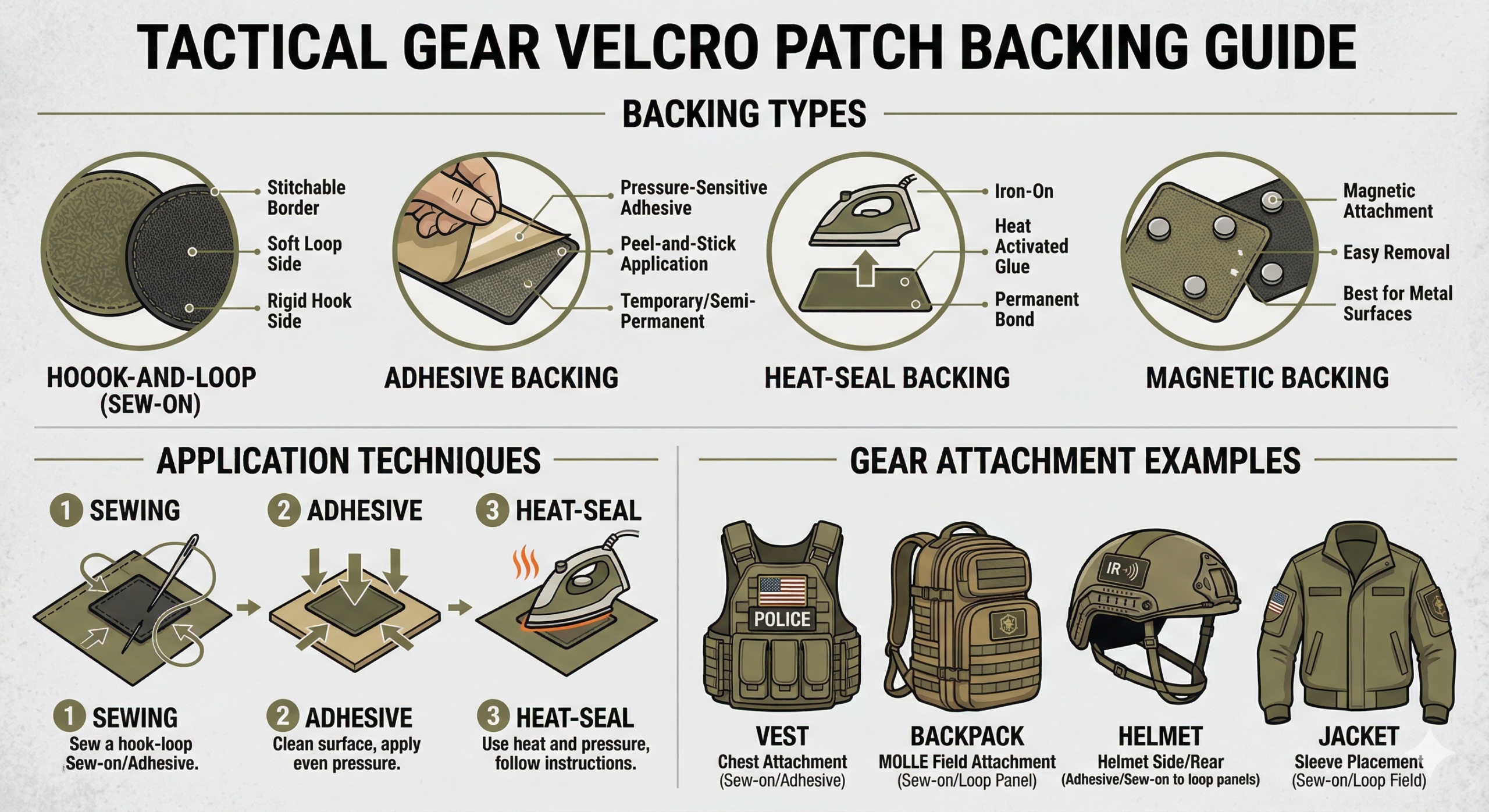
When it comes to efficiency and durability, these are two very important qualities when it comes to tactical gear. If you are equipping a private security firm in Toronto or a search and rescue team in British Columbia, the manner in which your identity and morale patches are secured could very well be the difference between gear failure and a professional image.
For tactical modifications, Velcro, also known as hook and loop, has risen to the top of the pack. Everything you need to know about Velcro patch backings will be covered in this book.
Velcro-Backed Patch: What Is It?
The Hook, or the rough, scratchy part, and the Loop, or the soft, fuzzy part, are two components of a Velcro patch. The hook part of most tactical patches is pre-stitched into the back of the PVC or embroidered.
Why Opt for Hook-and-Loop in Tactical Applications?
- Versatility: Change unit insignias, rank, or name tapes in a matter of seconds.
- Durability: Thousands of cycles can be endured by high-quality hook-and-loop.
- Safety: To avoid snagging or to swiftly move identification to a different layer of clothing in an emergency, a patch can be torn off.
Velcro Backing Types for Personalized Patches
There are usually three ways to apply the hook-and-loop to your design when placing an order with a Canadian custom patch maker:
- Hook and loop set of two-sided velcro
This is the most popular choice. You will also get the patch with the hook side attached. If you are putting a patch on an article of clothing that does not have a specific “loop” field, this is the best choice. - Velcro on One Side (Hook Only)
You will probably only need the hook side if you are buying patches for current battle shirts (UBACS), tactical backpacks, or plate carriers. “Female” loop fields are pre-installed on most current tactical gear. - Velcro with a heat seal
The patches are made with standard Velcro backings. Heat-sealed Velcro uses a special adhesive bond along with stitching on the edges to ensure that the backing never separates from the patch itself, thus providing a neater appearance and greater water resistance.
Where to Put Your Patches: A Guide to Placement
Adhering to established positioning procedures guarantees a tidy, consistent appearance for Canadian pros and hobbyists.
- Shoulder Pockets: The top sleeves of the majority of tactical jackets have 4×6-inch loop panels. These are set aside for large morale patches, national flags, or unit IDs.
- Chest Panels: “ID Panels” (such as POLICE, MEDIC, or SAR) usually use central loop fields on plate carriers or chest rigs.
- Admin Pouches: Smaller 1×3-inch strips work well for name tapes, ZAP numbers, and blood type patches (NKDA, O+).
- Headgear: A 2×3-inch loop field on the front and a 1×1-inch “IR square” on top are common features of tactical caps.
Technical Comparison: PVC vs. Embroidered Velcro Patches
| Feature | Embroidered Patches | PVC Patches |
|---|---|---|
| Durability | High (can fray over the years) | Extreme (waterproof/mudproof) |
| Detail | Classic, textured look | Sharp, 3D molded lines |
| Cleaning | Machine washable (gentle) | Wipe clean with a damp cloth |
| Best For | Uniforms and Heritage gear | Heavy field use and Rucking |
How to Keep Your Velcro Patches Clean
Velcro can easily get clogged with lint, mud, or pine needles in the harsh Canadian outdoors, which lessens its “stickiness.”
- The Comb Method: To remove debris from the hook side, use a fine-tooth comb or a specialized Velcro cleaning tool.
- Tape Lift: To remove lint and hair from the loop side, use a piece of duct tape.
- Cold Wash: To avoid the hooks snagging other clothing, wash your embroidered patches on a cold cycle inside a mesh laundry bag.
Why Place a Custom Tactical Patch Order in Canada?
By choosing a local company like Custom Patch Makers located in Canada, you can save yourself the troubles of international shipping and handling. More importantly, you are working with a group of people who are aware of the demands of the weather in Canada and can ensure that the materials you are using can withstand anything from a humid summer to a cold winter of -40 degrees Celsius.
High-thread-count embroidery and tactical-grade PVC patches are what we specialize in here at Custom Patch Makers Canada.
Are you ready to get started on your project? Our team is here to help you create a patch that sticks around when it counts the most, whether you need 10 patches or 10,000!
Contact us now to get a free quote!
Common Questions (People Also Ask)
Is it possible to transform an iron-on patch into a Velcro patch?
Yes, however, a conversion kit is necessary. Although we normally recommend a sew-on hook backing for tactical use for maximum security, adhesive-backed hook fabric can be placed on the back of an iron-on patch.
Does Velcro ultimately lose its grip?
The standard nylon hook and loop have a lifespan of 5,000 to 10,000 “rips.” It is not normally the patch itself that is slipping off, however, but rather the loop side, or the fuzzy part on your jacket, has “pilled” or worn out.
What size name tape do I want for a tactical operation?
A standard name tape size is 5 inches wide and 1 inch high in Canada. Most standard-issue and commercial tactical shirts conform to this standard.
Is Velcro noisy for a tactical operation?
Yes, the hook and loop “tear” is distinctive. Although many operators prefer a “silent” fastener for covert ops, Velcro remains the standard for identification and morale patches due to its reliability.