

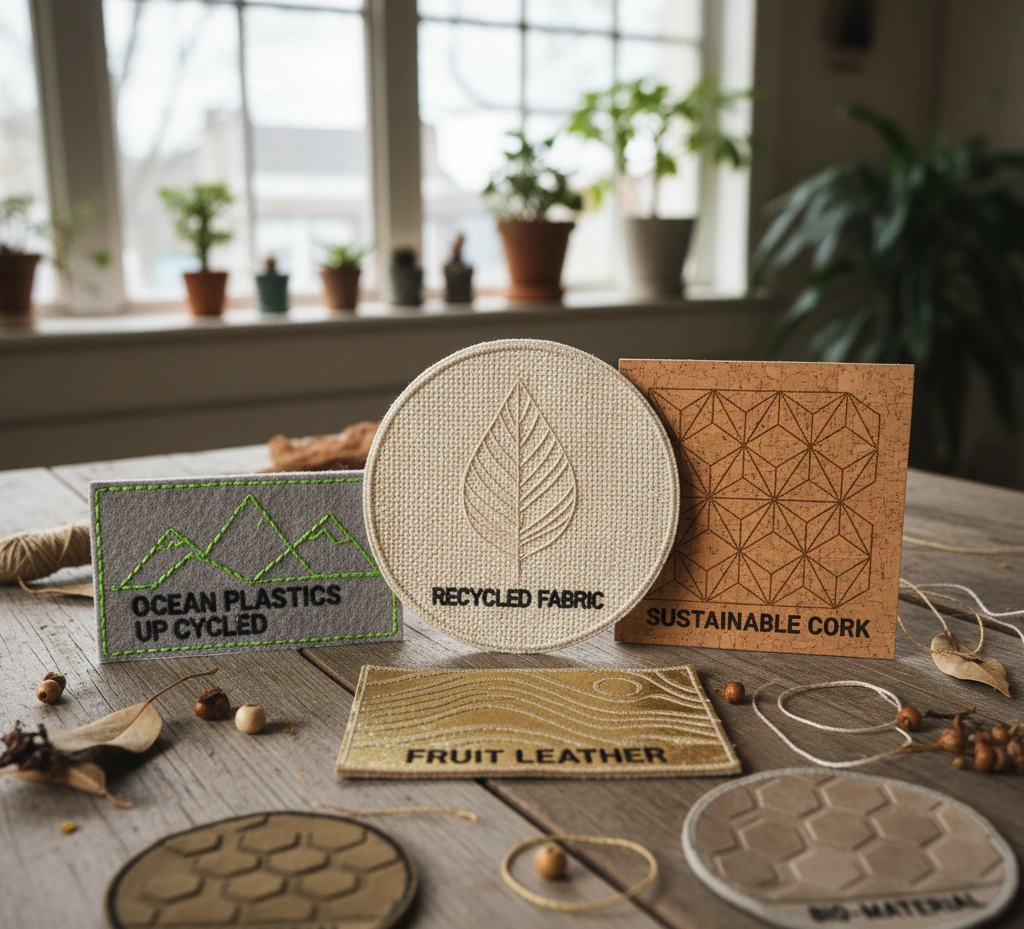
Sustainable patch material is not just a name; it is a unique selling point for any fashion brand. Modern clothing stores, online private label markets and fashion companies are using sustainable materials in patch production. You can either pick recycled fabric pieces or low-waste producing materials while manufacturing custom patches.
To create custom patches for your brands that protect nature and let you sell products to customers asking for sustainable materials, read this guide.
What Are the Latest Trends in Custom Patch Materials and Sustainability?
You can use recycled fabrics, organic colors, biodegradable materials and natural, friendly fibers in the production of sustainable patch manufacturing. This trend in custom patch production is energy efficient and relies on the digital patch designing process. This way, you can reduce the waste production and make low carbon emissions while creating durable custom patches.
Why Sustainability Matters in Custom Patches
The most critical factor that directly impact the nature is industrial waste. That’s why this trend in custom patches of sustainable material is helping nature recover with less production waste. Custom patches started as tiny fashion items, but now huge market demand for quality custom patches.
Recycled Materials in Custom Patch Production
Recycled materials are one of the smartest and most sustainable custom patch materials and are used everywhere nowadays. Many patches for fabrics are being customized from recycled polyester. Meanwhile, this material is made from plastic bottles and industrial waste. This way, manufacturers are helping in reducing the huge contribution of waste in landfills and energy consumption.
The benefits of using recycle materials for patches include:
- Cuts down raw material usage
- Reduces carbon footprint
- Supports circular production systems
Organic Cotton for Embroidered Patches
When you use organic cotton in customizing embroidered patches, it instantly replaces the traditional cotton embroidered patch. There is no use of harsh chemicals in the production of organic cotton, so it’s safe for the environment. Moreover, for regions that don’t have enough water sources, organic cotton uses less water to grow.
Benefits of using organic cotton in patch customization include:
- Softer and more breathable
- Chemical-free production
- Lower environmental impact
Rise of Biodegradable Patch Materials
The production and disposal of custom patches are now shifting to biodegradable materials. Many patch manufacturers rely on PLA (Plant-Based Polymers) in the patch-making process. These materials break down in a few days on their own, rather than synthetic materials for a patch, which stay in landfills for a long time.
Those brands that focus on zero waste policy, PLA is an ideal material for manufacturing custom patches.
Up cycling Deadstock Fabrics
You can transform potential waste into a smart opportunity by using leftover textiles. Many patch manufacturers heavily rely on textile waste to make creative cotton patches. With this method, many patch makers not only reduce the waste but also give them a limited edition feel.
It allows custom patch manufacturers to combine both creatively and sustainability.
Natural Fibers Like Hemp and Bamboo
You can ask for neutral fibers for environmentally friendly patch materials. Hemp, bamboo and cork are all renewable and biodegradable for custom patch production. You require minimal water and don’t require pesticides for the growth of hemp; it grows much faster.
Why every fashion brand prefers natural fibers for patch customization:
- Eco-friendly lifecycle
- Strong and durable
- Unique texture and appearance
Reusable Velcro Backings
Sustainable patches don’t just require environmentally friendly materials; they should be reusable as well. That’s where Velcro-backed custom patches come into the market with their reusable and unique designs. You don’t need multiple patches with reusable Velcro patches because they are easy to place and remove anytime.
Many brands choose Velcro-backed patches for flexibility and to reduce production waste.
Eco-Friendly Dye Sublimation Printing
Another way to customize sustainable custom patches is to use a reliable printing method with fewer chemicals. You get a cleaner alternative with proper dye sublimation for patches. All you need is a certain amount of heat to transfer the ink onto fabrics. Additionally, it requires no water and protects the environment with less pollution.
The benefits of using dye-sublimated printing on custom patches include:
- No wastewater generation
- Vibrant, long-lasting colors
- Safer production environment
Precision Laser Cutting Technology
Laser cutting is improving both quality and sustainability.
Many manufacturers use laser cutting for custom patches, which gives you both quality and is much safer for the environment. As you know, traditional ways of cutting patches and borders can create huge industrial waste. That’s why laser cutting minimizes the waste production and stays minimalistic.
You get better custom patch edges with laser cutting than traditioinal scissor or machine cuttings.
Digital Design to Reduce Production Waste
Now manufacturers don’t require physical samples or designing source because of digital designing software for patches. All you need is a reliable patch designing tool to review the results and confirm the patch design. No use of papers, fabrics or ink in designing custom patches anymore.
By using designing softwares for custom patches, you don’t just make less waste, but it also speeds up the whole process of customization.
Energy-Efficient Manufacturing Processes
Many patch manufacturing companies are using energy-efficient machines to design, cut and craft custom patches. Whether you need embroidery patches or simple printed patches, every material used is made using highly sensitive equipment.
However, common ways many patch makers craft custom patches include:
- Batch production for similar designs
- Low-energy machinery
- Streamlined manufacturing processes
Comparison: Traditional vs Sustainable Patch Materials
- Feature
- Traditional Materials
- Sustainable Materials
- Environmental Impact
- High waste, high emissions
- Waste, eco-friendly
- Raw Materials
- Synthetic, non-renewable
- Recycled, organic, renewable
- Durability
- Moderate
- High (with modern techniques)
- Cost Over Time
- Lower upfront, higher waste
- Cost-efficient long-term
- Brand Perception
- Neutral
- Positive, eco-conscious
Practical Tips for Choosing Sustainable Custom Patch Materials
To find the best custom patch sustainable material, follow these expert suggestions:
- Choose recycled or organic base materials
- Opt for reusable backing options
- Prioritize manufacturers with eco-certifications
- Use minimal, efficient designs to reduce material use
Following these recommendations helps you customize environmentally friendly custom patches with less waste production.
Final Thoughts
This major shift from traditional patch materials to sustainable custom patch materials is for nature’s good. We need beautiful custom patches, but not at the cost of ruining this world’s beauty. That’s why always choose sustainable custom patch makers who use biodegradable materials in designing and customization.
Get in Touch with quality sustainable patch material manufacturers in Canada. Visit Custom Patch Makers Canada today.