

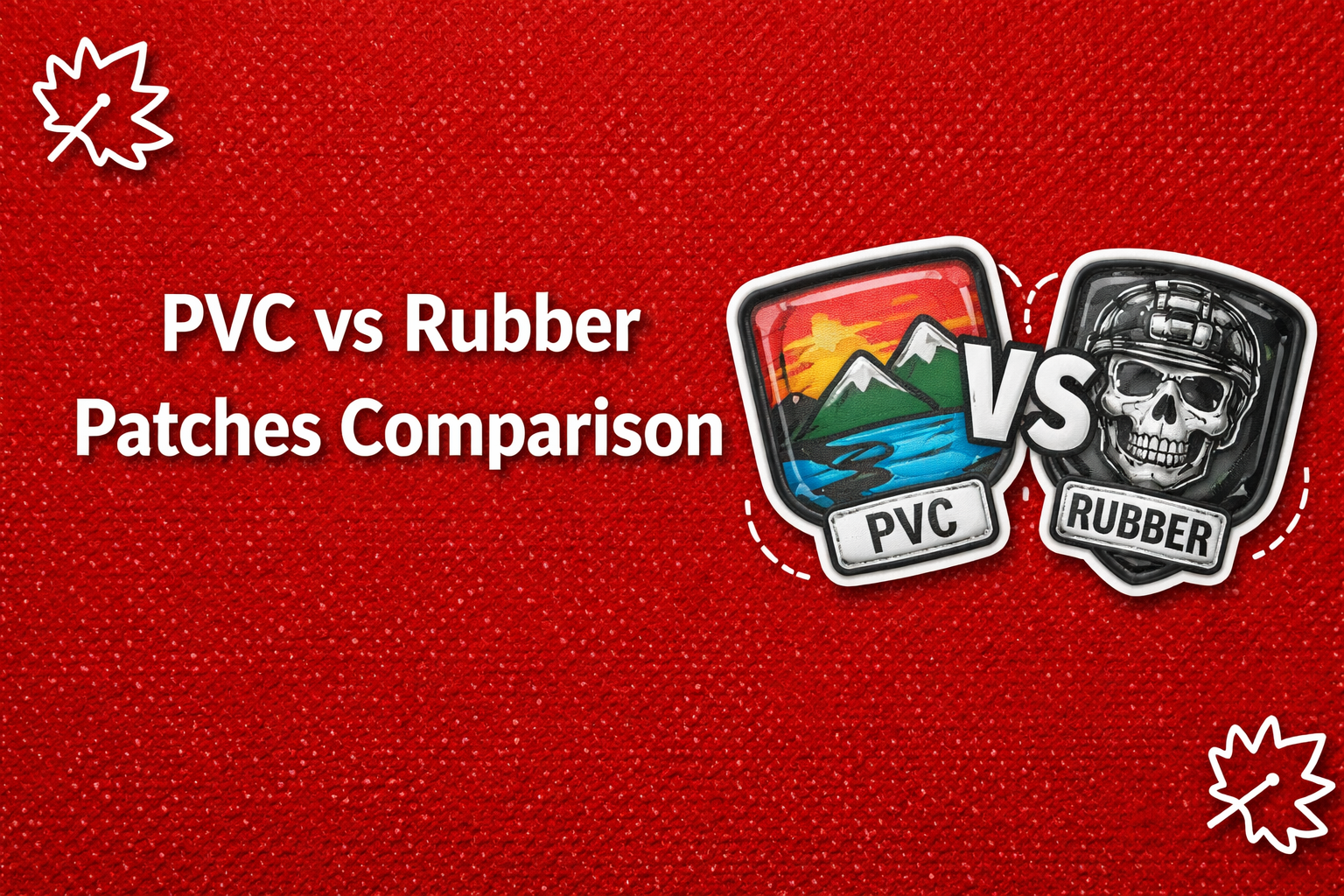
The two materials that lead the pack in the “rugged” segment of the custom branding industry are rubber and PVC. While the majority of people use the terms to mean the same, creating a long-lasting product involves a basic understanding of the technical and aesthetic differences between the two materials.
Custom Patch Makers, a leading custom patch manufacturer in Canada, excels at guiding tactical teams, brands, and outdoor enthusiasts in choosing the right material for the environment. As a guide to help you make a knowledgeable choice, this tutorial will cover the fundamental differences between the two materials, namely, PVC and rubber patches.
What is a PVC patch? Knowing the Material:
Polyvinyl chloride, or PVC, is a man-made product with considerable strength. The product termed “soft PVC” is used in the custom patch industry. A substance is created by the manufacturer that has the appearance of flexible rubber but also has the strength of an industrial plastic through the use of plasticizers.
Why Opt for PVC?
PVC is the industry standard in high-performance outdoor gear, clothing, and military gear. Its greatest advantage is that it can hold great detail. PVC is able to hold small text and complex logos that other embroidery methods cannot because it is poured into a liquid mold.
The “Rubber” Label: Synthetic versus Natural
If someone asks for “rubber patches,” they are typically asking for either Latex or Silicone Rubber.
- Natural Rubber is not typically used due to its degradation in the presence of lubricating substances or UV light.
- Silicone Rubber is often used in high-end fashion or medical industries due to its heat resistance compared to PVC. It also has a softer feel to the touch.
The flexibility of Soft PVC, which offers the best balance of cost and longevity, is what “rubber patch” requests are really asking for.
Important Distinctions: PVC vs. Rubber Patches
Let’s examine the competition in four key areas to assist you in making a decision: feel, cost, design, and durability.
-
Weather resistance and durability
Because of Canada’s climate, equipment must be able to withstand everything from coastal rain to very cold prairie winters.
- PVC Patches: These are virtually indestructible. They are impervious to UV fading and completely waterproof. They won’t “bleed” colors in the heat or crack in the cold.
- Rubber (Silicone): Compared to PVC’s “tougher” finish, silicone is more likely to break if it comes into contact with a sharp object, even if it is likewise waterproof.
-
Design Depth: 2D versus 3D Impacts
The “pop” factor is one of the main arguments in favor of these materials over needlework.
- 2D Design: Consists of several flat layers. It appears tidy, polished, and contemporary.
- 3D Design: Has sculpted, rounded edges. In 3D, PVC reigns supreme. It enables your logo’s components to really curve out toward the observer, creating a “bas-relief” impression.
-
Weight and Tactile Feel
- PVC: Feels a little “plastic” but is still incredibly flexible. It seems more upscale on bulky jackets or bags since it is heavier than thread-based patches.
- Silicone Rubber: Much softer and more “squishy.” It is frequently used for inside clothing labels or wristbands since it feels more like a skin-safe material.
-
Accuracy of Color
The Pantone Matching System (PMS) is used for these materials. However, the colors of PVC are “baked in” and cannot be removed by washing or scratching since they are mixed with the liquid substance.
Which of the Top Use Cases Is Best for You?
The placement of the patch will many times dictate the choice between the two.
- Law Enforcement & Tactics (PVC is King)
Custom PVC patches are the way to go for Canadian law enforcement, emergency medical services, and military units. They will not rip if snagged on branches as the patch is drawn through the underbrush. They are also easy to clean if chemicals or mud are a problem. For simple shifting on plate carriers or sleeves, most tactical units use Velcro (Hook & Loop) backing.
- Outdoor Equipment & Branding
PVC is the best choice for branding winter parkas, rain shells, and backpacks. They provide the gear with a high-tech appearance, which lets the end user know it’s designed to handle the elements.
- High-End Sportswear & Fashion (The Argument for Rubber/Silicone)
Silicone rubber is sometimes used in place of slightly stiffer PVC when the patch will be in contact with the skin (such as a t-shirt hem patch) or when it needs to be extremely lightweight.
The Procedure for Making Custom PVC Patches
Comprehending the production process facilitates the explanation of lead times and costs.
- The Metal Mold: For your unique design, a special CNC-engraved steel mold is made.
- Color Injection: Layer by layer, liquid PVC is injected into the mold.
- Baking: To “cure” the material into a firm, flexible piece, the mold is put in a high-heat oven.
- Backing Application: We add an adhesive backing, Hook and Loop (Velcro), or sew-on channel according to your requirements.
Upkeep: How to Keep Your Patches Clean
One of the best “People Also Ask” topics is how to maintain the patches. Unlike the PVC and rubber patches, the embroidered patches tend to accumulate dirt in the stitches.
- The Wipe Test: A damp cloth can be effective in cleaning most of the dirt.
- Deep Clean: A soft toothbrush and soapy water can be effective in cleaning stubborn dirt and grease. They can remain in perfect condition even after years of use.
Why Purchase from a Canadian Patch Makers?
You are not searching for a product, but for a sense of reliability when choosing a custom patch maker in Canada. Buying local from CustomPatchMakers.ca ensures:
- No Hidden Duties: Avoid the surprise brokerage fees and customs delays associated with shipping from overseas.
- Local Knowledge: We understand the needs of the Canadian market, from the durability required for forestry gear in British Columbia to the appearance required for business branding in Toronto.
- Quicker Turnaround: Avoid the weeks of shipping by sea.
Opinion: Rubber vs. PVC
For a personalized patch, soft PVC is always the way to go, even though most customers refer to it as “rubber.” It gives you more vivid 3D effects, more durability, and finer details at a more affordable price.
Are you ready to get started on your project? Our staff at Custom Patch Makers Canada is ready to help you, whether you need 50 patches for a local club or 5,000 patches for a national brand.
Bring your 3D design to life with a free quote from CustomPatchMakers.ca!
FAQs about PVC and rubber patches
What is the difference between PVC and rubber patches?
PVC patches are more durable and detailed, while rubber patches are softer and more flexible.
Are PVC patches better than rubber patches?
Yes, PVC patches are more waterproof, long-lasting and better for outdoor use.
Are rubber patches waterproof?
Yes, rubber patches are waterproof but less durable compared to PVC patches.
Which is better for tactical patches PVC or rubber?
PVC patches are better for tactical use because they are rugged and weather resistant.
Do PVC patches crack over time?
No, high-quality soft PVC patches remain flexible and do not crack easily.